Protection Response Tactics®
Protection Is Different.
It Deserves Its Own System.
A professional defensive tactics system built specifically for those responsible for protecting others.
Protection Response Tactics® prepares protection professionals, security practitioners, and defensive tactics instructors to make intelligent, appropriate, and defensible decisions across the full spectrum of protective environments.
The system places client safety, professional judgment, environmental awareness, proportional force, and mission success ahead of personal victory.
Built for executive protection professionals, personal protection specialists, private security practitioners, agencies, teams, and instructors responsible for protecting others.
The System
Built For The Mission Of Protecting Others
Protection Response Tactics® is a principle-based defensive tactics system designed specifically for executive protection professionals, personal protection specialists, security practitioners, agencies, teams, and instructors responsible for protecting others.
The protection professional operates under a different mission than a martial artist, competitive fighter, law enforcement officer, or military operator. The goal is not personal victory. The goal is to reduce risk to the client, preserve movement, protect the team, manage the environment, and complete the protective mission.
Protection Response Tactics does not simply ask whether a tactic can work. It asks whether the response is appropriate for the client, the threat, the environment, the level of force, and the professional responsibility of the protector.
Client Risk Comes First
The protector’s responsibility is to reduce risk to the client, not to win a personal confrontation or prove physical dominance.
The Environment Changes The Tactic
Vehicles, crowds, cameras, walls, doorways, confined spaces, bystanders, and team movement all change what response is appropriate.
The Response Must Match The Problem
PRT develops options across multiple levels of force so the practitioner can choose an effective, measured, and defensible response.
A Different Training Standard
Judgment Before Technique
PRT develops observation, communication, critical distance, positioning, timing, control, environmental awareness, and decision-making. Techniques remain important, but they are taught as applications of deeper principles rather than isolated movements to memorize.
The Industry Problem
Most Defensive Tactics Were Never Designed For Protection Work
Martial arts, sport fighting, law enforcement defensive tactics, and military combatives can all provide valuable skills. But each was developed for a different mission, environment, and professional responsibility.
Protection professionals are not simply preparing to win a physical confrontation. They may be responsible for moving a client, managing a team, controlling a public environment, preserving an evacuation route, working around cameras and witnesses, and making decisions that must remain reasonable and explainable after the event.
A tactic that works in a ring, patrol setting, military environment, or traditional martial arts school may not automatically fit the realities of executive protection. The technique may be physically effective while still creating unnecessary risk to the client, the agent, the organization, or the mission.
Protection Response Tactics® was created to close that gap. The system begins with the responsibilities of the protector and then develops tactics, principles, and decision-making tools that fit those responsibilities.
A Different Mission
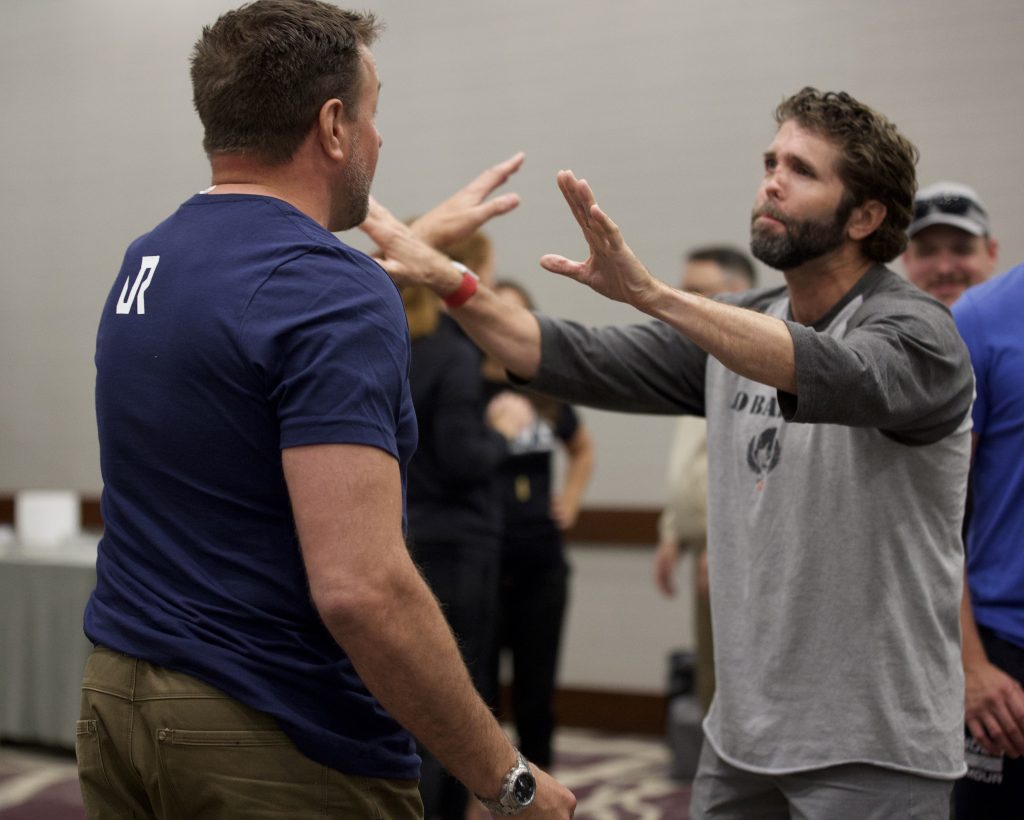
The protector’s goal is not personal victory. The goal is to reduce client risk, maintain mobility, preserve the protective formation, and complete the mission.
A Different Environment
Protection work happens around vehicles, crowds, doorways, walls, confined spaces, public venues, teams, bystanders, and unpredictable movement.
A Different Standard
The response must be physically effective while also remaining proportional, visually appropriate, socially acceptable, and legally explicable.
Protection is a unique profession. It deserves a defensive tactics system designed specifically for the realities of protecting others.
The Design Standard
Every Response Is Measured Against Five Standards
Every tactic inside Protection Response Tactics® is evaluated against the same professional standards.
A response is not considered appropriate simply because it can work physically. It must also account for the client, the mission, the environment, the level of threat, the public setting, and the professional consequences of the decision.
Visually Appropriate
The response should make sense when viewed by the client, witnesses, cameras, employers, team members, or the public.
Socially Acceptable
The response must fit the social environment and avoid unnecessary escalation when lower-level options remain available.
Legally Explicable
The practitioner should be able to explain why the response was reasonable, necessary, proportional, and appropriate.
Environmentally Designed
The tactic must function where protection professionals actually work, including vehicles, hallways, doorways, crowds, restaurants, sidewalks, walls, confined spaces, and transitional environments.
Built On A Force Continuum
The response must match the problem. PRT develops options across the entire continuum so the practitioner is not forced to use an assault-level answer for a lower-level situation.
Protection Response Tactics does not simply ask,
“Can this work?”
The professional asks,
“Is this the most appropriate response for this client, this mission, this environment, and this level of threat?”
The Lower Levels Of Force
Protection Begins Before The Fight
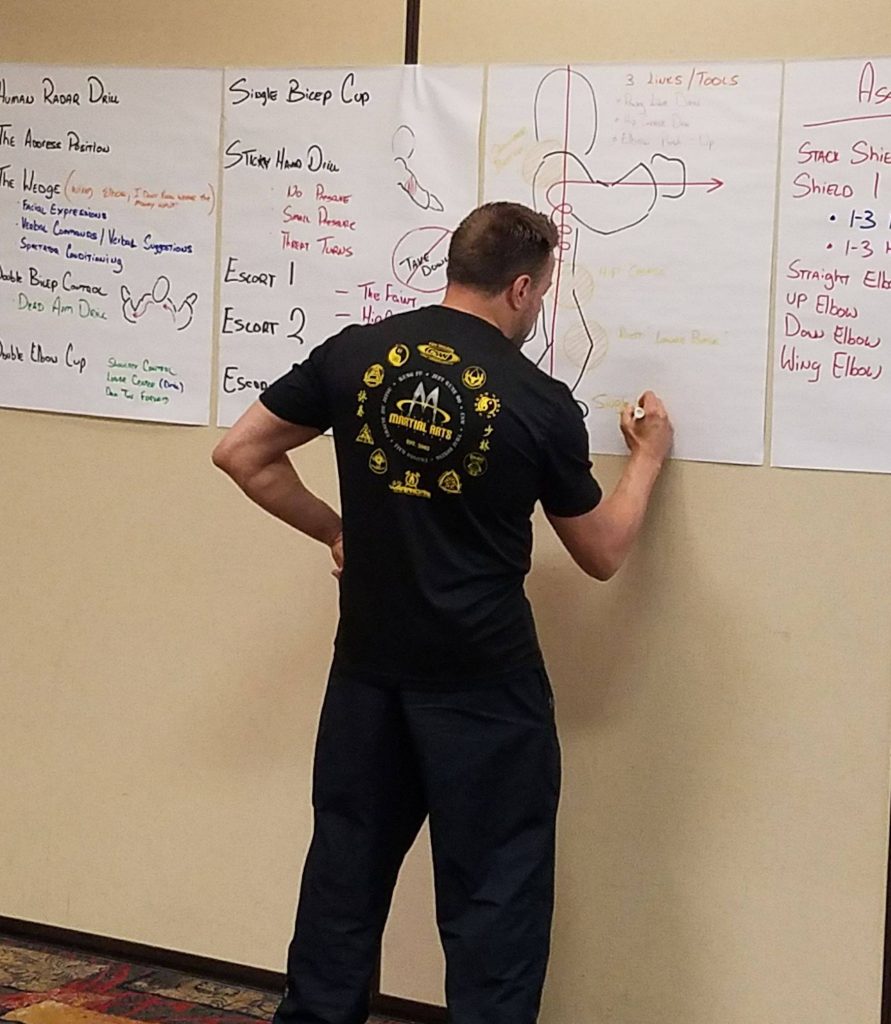
Protection work rarely begins with violence. It begins with reading the environment, recognizing intent, managing distance, communicating clearly, and positioning yourself before the situation becomes physical.
One of the defining differences in Protection Response Tactics® is the serious attention given to the lower levels of force. Practitioners receive practical tools for managing potential problems before they become fights, while still developing highly effective assault-level and lethal-force capabilities for situations where decisive action becomes necessary.
Professional Presence
Project calm, confidence, awareness, and control before physical contact begins. Presence can influence behavior, discourage predatory testing, and establish professional authority.
Observation
Read posture, movement, weight distribution, emotional state, pre-attack indicators, environmental changes, and the early formation of a potential threat.
Judgment
Select the response that fits the client, the mission, the environment, the level of risk, and the professional consequences of the decision.
Critical Distance
Use distance to create time, improve observation, manage access, recognize intent, and prevent a potential threat from reaching physical contact without first revealing movement.
Verbal Tactics
Use language, active listening, posturing, and tactical communication to influence behavior, manage social pressure, expose intent, control the exchange, and prevent unnecessary escalation.
The Professional Lives In The Lower Levels Of Force
Speak with experienced protection professionals who have spent decades in the industry and ask how often they actually made a fist during their careers. Some will laugh. Others may tell you it happened once, and that they regretted allowing the situation to reach that point.
That is not because effective higher-force skills are unnecessary. A protection professional must be prepared for assault-level violence, lethal-force encounters, weapons, ambushes, and situations where immediate decisive action may be required.
The difference is that skilled professionals become exceptionally capable at everything that happens before those moments. They recognize problems earlier, manage distance, influence behavior, control movement, communicate clearly, and resolve situations without immediately escalating to assault-level tactics.
Many martial arts and defensive tactics systems concentrate almost entirely on assault-level responses. When those are the only tools a practitioner has developed, those are the tools most likely to appear under stress. For a protection professional, that creates unnecessary physical, legal, reputational, and operational risk for both the practitioner and the client.
Protection Response Tactics develops practitioners across the entire force continuum. The goal is to prepare them thoroughly for the highest levels of violence while making them so capable at the lower levels that escalation becomes the exception rather than the default.
The highest level of professional performance is not demonstrated by how well you fight. It is demonstrated by how rarely you need to.
The Force Continuum
Capability Across Every Level Of Force
Protection Response Tactics® develops professional options across the entire force continuum so the practitioner can match the response to the threat, the environment, the client, and the mission.
The purpose of the continuum is not to encourage escalation. Its purpose is to expand the practitioner’s options. The more capable a protection professional becomes across every level, the less likely they are to use an assault-level response simply because it is the only response they know.
The Pro Explore
The Threat Thinks It Is A Fight. You Are Still Working.
At this level, the violence may look like a fight to everyone watching. The protection professional may be receiving strikes, managing aggressive resistance, or absorbing pressure while continuing to protect the client.
The practitioner must still think like a professional. The client, team, witnesses, cameras, extraction route, public setting, proportionality, and legal consequences remain part of every decision.
Sometimes the professional must absorb pressure, remain emotionally controlled, and continue using measured tactics because that is what the mission requires.
Gloves Are Off Explore
The Threat Has Crossed The Line.
There may come a point where professional restraint is no longer sufficient to protect the client, the practitioner, or another person from serious harm.
The protection professional should resist crossing this threshold until it is genuinely necessary. Once the threat removes the lower-force options, however, decisive action may become the professional responsibility.
The shift is not driven by anger, ego, or the desire to punish. It is driven by necessity, judgment, and the immediate responsibility to stop the threat.
Lower-Level Capability Reduces Escalation
Observation, verbal tactics, professional presence, critical distance, positioning, and soft control allow the practitioner to solve many problems before higher force becomes necessary.
Higher-Level Capability Remains Essential
When the threat crosses the line into serious violence, the practitioner must possess effective assault-level and lethal-force capabilities and the judgment to apply them decisively.
The objective is not to use the most force available. The objective is to use the most appropriate force required.
The Educational Method
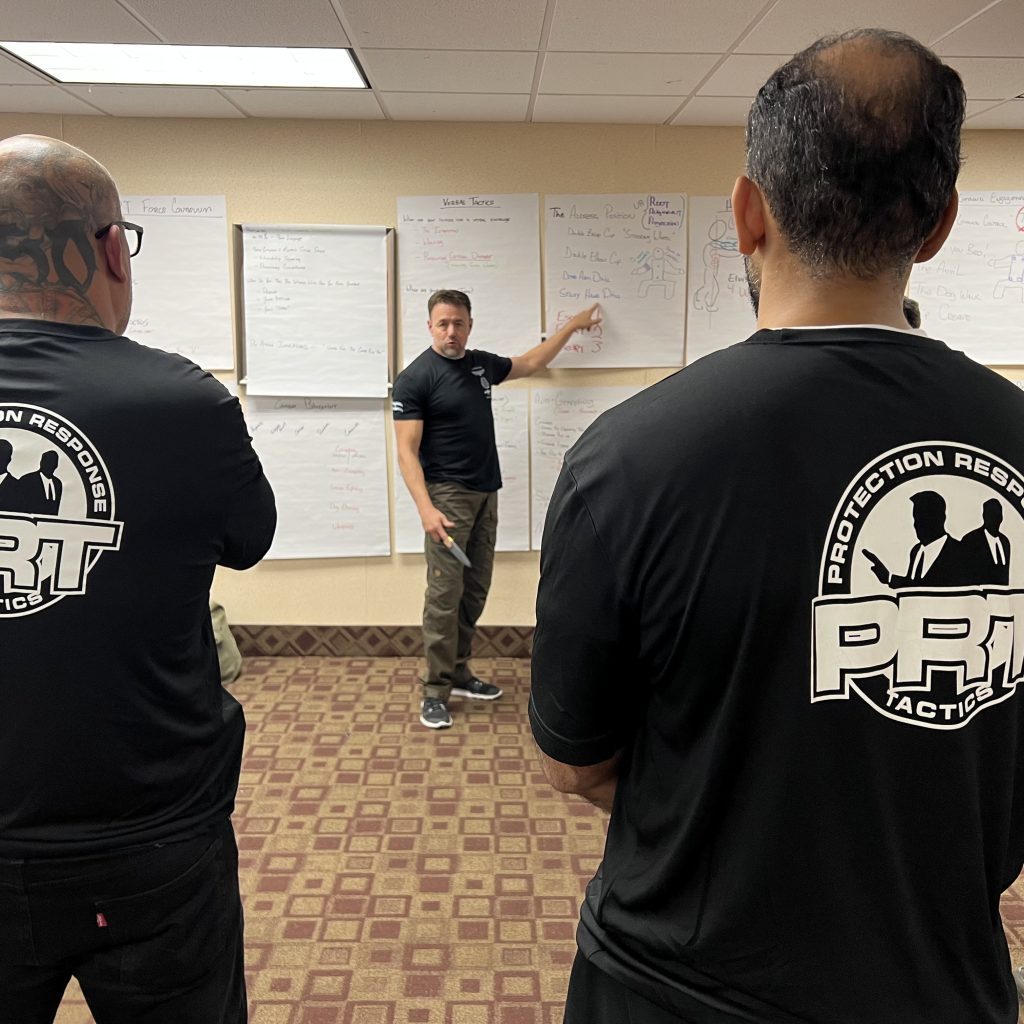
Principles Before Techniques
Protection Response Tactics® does not begin by asking students to memorize long sequences of movements. It begins by changing how they see the problem, how they evaluate it, and how they make decisions under pressure.
Techniques remain important, but techniques are only applications. Timing changes. Position changes. The environment changes. The threat changes. The client moves. Weapons appear. Space disappears. A memorized sequence may no longer fit the problem.
PRT develops the deeper capabilities that allow the practitioner to adapt when conditions are imperfect. The student learns to understand the mission, evaluate the situation, apply universal principles, develop functional attributes, and validate performance through pressure testing.
Education creates adaptability. Memorization creates dependency.
Perspective
Understand the protection mission and learn to see the problem through the correct professional lens.
Judgment
Evaluate the client, threat, environment, timing, force level, available options, and potential consequences.
Principles
Learn the universal requirements that govern effective responses across changing situations and environments.
Attributes
Develop timing, sensitivity, structure, balance, observation, pressure control, adaptability, and body state.
Application
Express those capabilities through tactics designed for specific problems, force levels, and operational environments.
Pressure Testing
Validate performance through progressive resistance, scenario work, environmental drills, and proficiency evaluation.
How The Method Appears In Training
Principles Remain When The Situation Changes
The specific application may change, but the underlying requirements remain consistent. This allows the practitioner to solve problems rather than depend on one memorized answer.
Weapon Intervention
The practitioner learns to move off-line, secure the weapon system, maintain reinforced control, disrupt the attacking structure, and receive or remove the weapon.
Vehicle-Centric Defensive Tactics
The practitioner learns to adapt to restricted movement, seated positions, compromised posture, client movement, hard surfaces, and confined operating space.
Weaponized Grappling
The practitioner learns to protect weapon access, create mobility, monitor the threat’s hands, maintain awareness, and exit the ground instead of grappling for sport.
Techniques are important. Principles are what allow the professional to adapt when the technique no longer fits the problem.
Real-World Operating Conditions
The Environment Changes The Tactic
Protection professionals do not perform their duties in the middle of an empty room with unlimited movement, perfect balance, and ideal positioning.
They work in hallways, vehicles, restaurants, hotel rooms, sidewalks, crowds, doorways, elevators, parking structures, offices, and transitional spaces. These environments restrict movement, alter visibility, compromise posture, limit available force options, and create additional responsibilities for the client and the team.
Protection Response Tactics® treats the environment as part of the problem, not merely the background behind it. Practitioners learn to adapt their movement, positioning, control, communication, and force options to the physical realities of the moment.
Vehicles
Restricted MobilitySeated positions, doors, windows, seat belts, passengers, hard surfaces, limited access, and client extraction create problems that conventional training rarely addresses.
Hallways And Doorways
Transitional SpaceNarrow pathways restrict movement, compress distance, create choke points, and change how the practitioner positions themselves between the threat and the client.
Walls And Vertical Surfaces
Structure And PressureWalls may trap the practitioner, restrict escape, support the threat, or become useful structures for balance, control, impact management, and positional advantage.
Tables And Public Spaces
Optics And ObstaclesRestaurants, conference rooms, offices, and public venues introduce furniture, witnesses, cameras, bystanders, limited movement, and reputational concerns.
Crowds
Movement And SeparationCrowds limit visibility, conceal intent, create multiple contact points, complicate team movement, and increase the risk of client separation or secondary threats.
Dog Boxing
Out-Of-Position FightingDog Boxing develops the ability to function when posture is compromised, space disappears, movement is restricted, and the practitioner is pinned, seated, kneeling, turning, recovering, or working from an awkward position.
Protection Work Rarely Gives You Ideal Conditions
Many martial arts systems train students to operate while standing upright in open space. Protection work does not provide that luxury. The practitioner may be exiting a vehicle, seated beside a client, pressed into a wall, moving through a crowd, operating around furniture, or recovering from a compromised position.
PRT prepares the practitioner to remain functional when balance, posture, space, visibility, and movement are no longer ideal.
Protection Response Tactics does not train practitioners only for ideal conditions. It prepares them for the environments where protection professionals actually work.
The Professional Development Path
Six Progressive Phases. One Integrated System.
Protection Response Tactics® develops professional capability through six progressive phases. Each phase builds upon the principles, attributes, judgment, and applications established before it.
The objective is not simply to accumulate more techniques. The objective is to develop a protection professional who can recognize problems, adapt to changing conditions, select an appropriate response, and perform effectively under pressure.
Each phase builds upon the last. The objective is not simply to learn more techniques. The objective is to develop a more capable protection professional.
Instructor Development
More Than A Certification
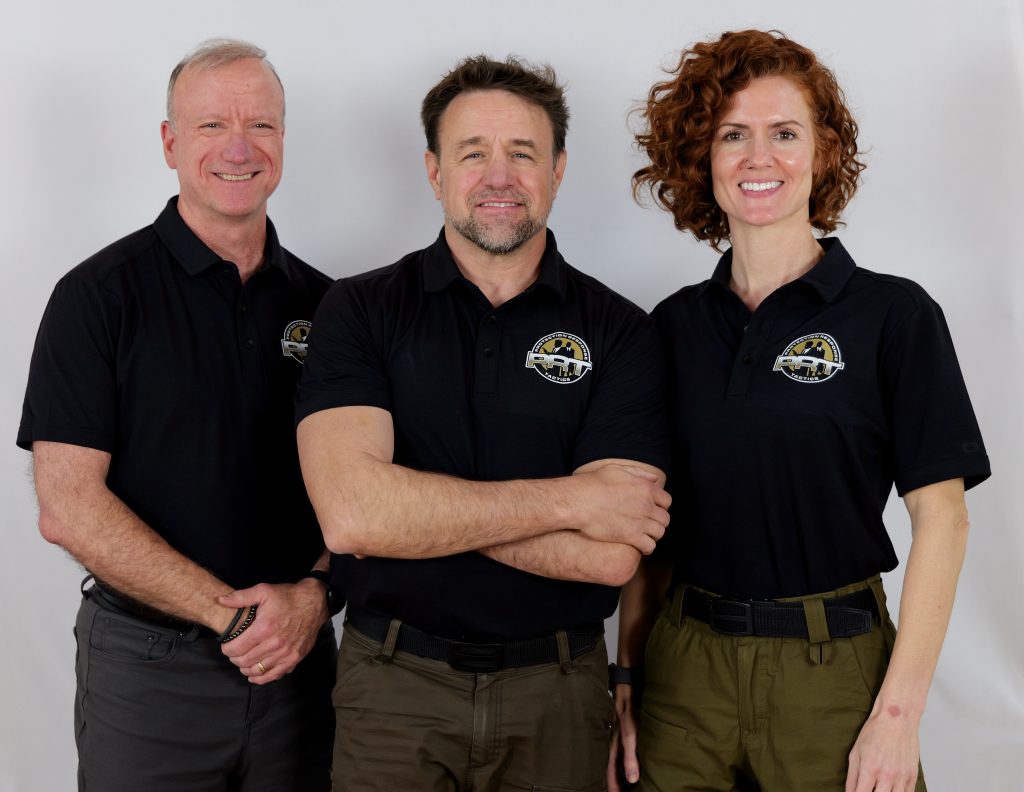
Protection Response Tactics® develops instructors through three progressive certification levels. Each level expands the portion of the system the instructor is qualified to teach.
The pathway is designed to build technical understanding, teaching ability, professional judgment, presentation skill, and responsibility over time. The instructor does not receive access to the entire system at once. They progress through the curriculum as their knowledge, experience, and instructional maturity develop.
Certification identifies the material an instructor is qualified to present. Continued development determines how effectively they can teach, explain, represent, and preserve the standards of Protection Response Tactics.
Qualified To Teach Phases One And Two
The instructor may teach the foundational and assault-level portions of the PRT curriculum.
Qualified To Teach Phases One Through Four
The instructor expands into weapon intervention and environment-specific defensive tactics.
Qualified To Teach All Six Phases
The instructor is qualified to present the complete Protection Response Tactics curriculum.
Certification determines what material an instructor is qualified to teach. Development determines how well they can represent, explain, and lead the system.
Beyond The Three Certification Levels
Instructors who demonstrate long-term commitment, instructional maturity, leadership ability, and service to the association may continue into the advanced Train-the-Trainer pathway. These designations represent upper-level leadership and management responsibilities within the PRT organization.
Professional Application
Built Through Professional Application
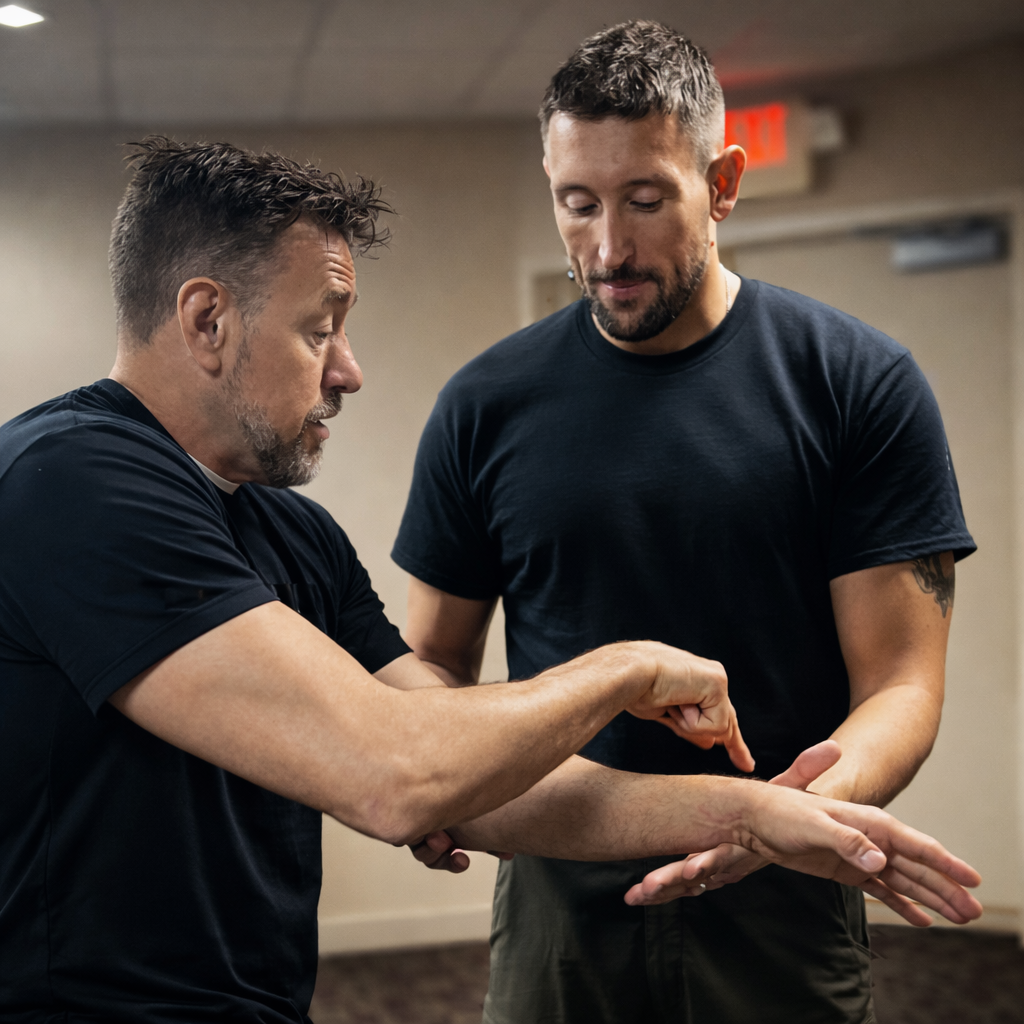
Protection Response Tactics® was not developed in isolation. The system has been shaped through decades of teaching, program design, professional collaboration, and application across multiple protective environments.
Different organizations have trusted Alan Baker to help solve different problems related to executive protection, vehicle defense, active-threat response, weapon intervention, combatives, and instructor development. Each of those environments has contributed to the continued refinement of the PRT doctrine and curriculum.
Executive Protection Institute
Executive Protection EducationThe public student-level Protection Response Tactics program is taught through the Executive Protection Institute, where practitioners receive protection-specific defensive tactics education connected to the realities of executive protection work.
Vehicle Dynamics Institute
Vehicle-Centric Defensive TacticsVehicle-Centric Defensive Tactics was developed to address threats inside, around, and during movement near vehicles. This proven body of material forms an important part of Phase Four within the PRT system.
A.L.I.V.E. Active Shooter Training
Weapon Intervention And DisarmingAlan Baker developed the Attacking the Weapon System and Weapon Disarming material used within A.L.I.V.E. training, contributing principle-based firearm intervention and disarming methodology.
Tactical 21
Combatives And Executive ProtectionAs Director of Combatives and Executive Protection, Alan contributes professional leadership, training design, and advanced instruction across combatives and protective operations.
Different Problems
Vehicles, weapons, active threats, client movement, confined environments, and professional instruction each reveal different tactical requirements.
Shared Principles
The strongest principles survive across environments, pressure levels, and professional contexts while weaker assumptions are exposed and removed.
Continued Refinement
Every event, training environment, instructor group, and professional partnership contributes to the continued evolution of the system.
Protection Response Tactics has been strengthened by the responsibility of solving real protective problems across multiple professional environments.
Protection Response Tactics® Field Briefing
Begin The PRT Orientation Journey
Continue your education through a structured introduction to the philosophy, standards, force continuum, instructor development process, and professional approach behind Protection Response Tactics®.
The PRT Orientation Journey is designed for protection professionals, security practitioners, instructors, agency leaders, and serious students who want to understand why the system is different and how it prepares practitioners to operate across the full range of protective problems.
This is not a promotional newsletter. It is an educational sequence designed to help you think more clearly about protection-based defensive tactics, professional judgment, lower-level force, environmental adaptation, and instructor development.
Start Your Orientation
Enter your information below to begin receiving the PRT Orientation Journey and future professional education from the Protection Response Tactics team.
No spam. You will receive professional education, training updates, event announcements, and resources related to Protection Response Tactics®.
The page introduces the system. The Orientation Journey begins the deeper study.